

Optomap & OCT Retinal Scans: Why Santa Monica Patients Are Skipping Dilating Eye Drops
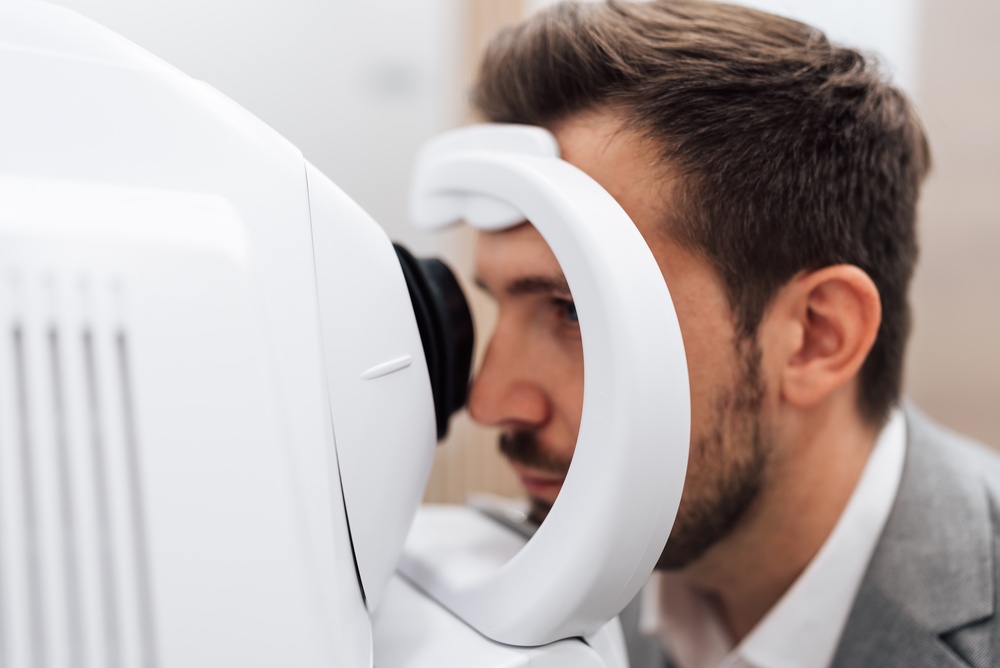
Traditional eye exams often involve dilating eye drops to help your optometrist examine the back of your eyes. While dilation remains important in certain situations, advanced retinal imaging technology now allows many patients to receive detailed eye health screenings without the temporary blurry vision and light sensitivity associated with dilation.
At Ocean Park Optometry in Santa Monica, CA, we use Optomap and Optical Coherence Tomography (OCT) to evaluate retinal health, identify potential concerns, and provide a more comfortable examination experience.
What Is an Optomap Retinal Scan?
Optomap is an advanced retinal imaging technology that captures an ultra-widefield image of the retina. Unlike traditional examination methods that provide a limited view without dilation, Optomap allows us to examine a much larger portion of the retina in a single image.
At our Santa Monica office, we use the Optos California system to capture detailed retinal images quickly and comfortably.
These images help us identify potential signs of retinal tears, diabetic eye disease, and other abnormalities that may require additional evaluation. We can also compare images over time to monitor changes in your eye health.
How Does OCT Retinal Imaging Work?
Optical Coherence Tomography (OCT) provides a different perspective on eye health. While Optomap captures a wide view of the retinal surface, OCT creates detailed cross-sectional images of retinal layers and other ocular structures.
At Ocean Park Optometry, we use the Optovue Avanti OCT system to evaluate structures that cannot be fully assessed through standard retinal photography.
OCT imaging can help us detect or monitor conditions such as:
Glaucoma: Identifying changes in the retinal nerve fiber layer associated with optic nerve damage.
Macular Degeneration: Detecting structural changes in the macula that may affect central vision.
Diabetic Retinopathy: Evaluating retinal changes, including swelling that can affect vision.
Macular Edema: Identifying fluid accumulation within the retina.
Other Retinal Conditions: Examining structural abnormalities that may require further testing or specialist care.
By combining Optomap and OCT retinal scans, we gain complementary information about your eyes.
Can Optomap and OCT Replace Dilating Eye Drops?
One of the biggest advantages of advanced retinal imaging is that these scans generally do not require dilating eye drops.
For many patients in Santa Monica, this means a more convenient appointment without the temporary visual disturbances caused by dilation.
However, Optomap and OCT do not completely replace a dilated eye exam. Dilation may still be necessary when we need to examine specific areas of the retina more thoroughly or investigate symptoms and suspected eye conditions.
Our team determines whether dilation is needed based on your medical history, symptoms, and examination findings.
Why Choose Advanced Retinal Imaging in Santa Monica?
At Ocean Park Optometry, we believe comprehensive eye care should combine modern technology with personalized attention.
Our Advanced Retinal Diagnostics screening incorporates Optomap and OCT technology to provide a detailed assessment of retinal health. These noninvasive tests are quick, comfortable, and useful for establishing baseline images that we can reference during future appointments.
Advanced imaging is particularly valuable because some eye diseases develop without noticeable symptoms. Regular examinations help us identify concerning changes early and recommend appropriate monitoring or treatment.
Whether you have existing eye health concerns or simply want a more thorough annual examination, our team can help determine which retinal imaging tests are appropriate for you.
Schedule your comprehensive eye exam with Ocean Park Optometry in Santa Monica, CA, and learn more about our Optomap and OCT retinal scans. Contact our office at (310) 452-1039 to book your appointment today.




Contact Info
Office hours
© 2026 Ocean Park Optometry. All Rights Reserved. Accessibility Statement - Privacy Policy - Sitemap
